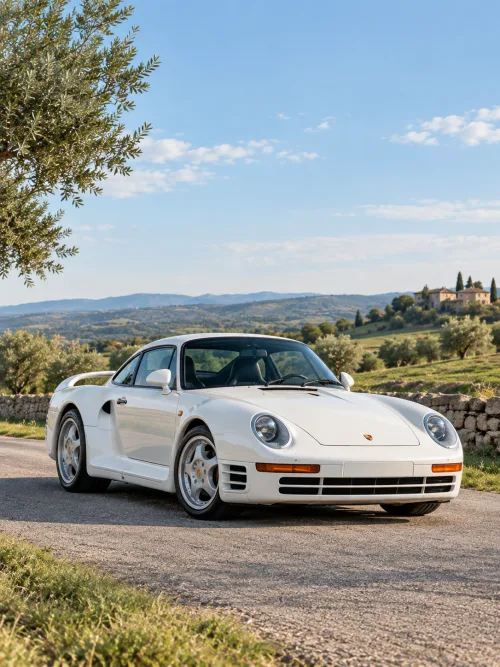
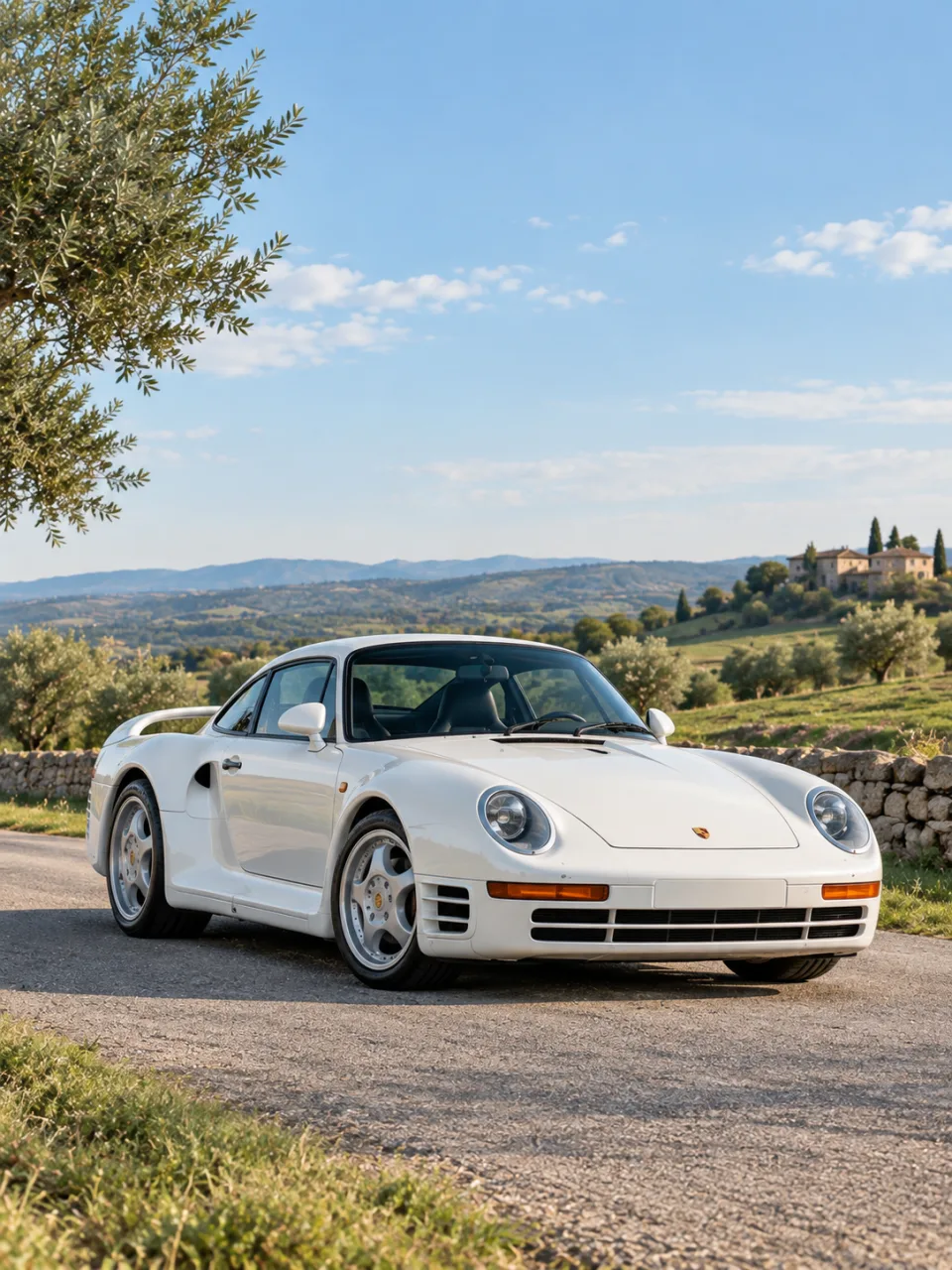
Porsche Porsche 959
The Porsche 959 is an iconic German supercar developed during the 1980s, originally inspired by the FIA Group B rally category. Produced in limited numbers, it combined advanced automotive engineering with exceptional performance. Its 2.85-liter twin-turbocharged flat-six boxer engine produces 444 hp and 369 lb-ft of torque, paired with a six-speed manual transmission and an electronically controlled all-wheel-drive system. Featuring a lightweight composite body, adaptive suspension, adjustable ride height and advanced traction technology for its era, the Porsche 959 became one of the most influential performance cars of its generation. With a top speed of approximately 197 mph, it remains a landmark in Porsche's engineering history.
Technical Specifications
| Engine / Powertrain | 2.85L Twin-Turbocharged Flat-6 Boxer |
|---|---|
| Peak Output | 444 hp @ 6,500 rpm |
| Peak Torque | 369 lb-ft @ 5,500 rpm |
| Transmission | 6-Speed Manual |
| Drivetrain Layout | All-Wheel Drive (AWD) |
| Acceleration (0–60 MPH) | 3.6 seconds |
| Top Speed | 197 mph (317 km/h) |
| Curb Weight | 3,197 lbs (1,450 kg) |
| Exterior Dimensions | 4,260 × 1,840 × 1,280 mm |
| Data Verification Status | Verified (Homologation Standard) |
Development History
The Porsche 959 was developed during the 1980s as a high-performance sports car showcasing Porsche's advanced engineering capabilities. Initially conceived for Group B rally competition, the project began with the Porsche 953 rally car program and evolved into an ambitious road-going supercar. Unveiled as a concept at the 1983 Frankfurt Motor Show, the 959 featured cutting-edge technology, including sequential twin-turbocharging, an advanced all-wheel-drive system, adjustable suspension and a lightweight body incorporating composite materials. Porsche refined the car to deliver exceptional performance, stability and everyday usability. The production model entered the market in 1986, with customer deliveries following in the late 1980s. The Porsche 959 also demonstrated its durability in motorsport, achieving an overall victory in the 1986 Paris–Dakar Rally. Its combination of speed, technological innovation and limited production established it as one of the most influential supercars in automotive history.